
When I first started taking fish oil, I wandered around Costco and saw various brands with labels stating different values like 1400 milligrams of fish oil and 1000 milligrams of Omega-3. I couldn’t figure out how much of the beneficial components I was actually getting from these supplements. Later, after doing some online research, I finally understood it. 以前開始吃魚油時, 跑到Costco 瞎逛, 看到各牌魚油, 罐子上標著魚油含量1400毫克, omega-3 含量1000毫克 等等不一樣的數值, 搞不清究竟這吃下去的魚油到底含多少我們需要的好成分. 後來上網查了一些資料才終於搞懂這罐看似人人都買但是卻鮮少人明白的營養添加品.
Before delving into fish oil, let’s briefly talk about fats. Most people are familiar with the distinction between saturated and unsaturated fats. Fats from animal sources are saturated fats, while fish oil provides unsaturated fats. Unsaturated fats include omega-3, omega-6, and omega-9 fatty acids. To break it down further, omega-3 and omega-6 are classified as polyunsaturated fatty acids, which the human body cannot produce on its own and must be obtained through diet—hence the term “essential fatty acids.” On the other hand, omega-9 is a monounsaturated fatty acid that the body can synthesize without external supplementation. Among these, omega-3 and omega-6 are particularly important because their intake and balance in the diet play a significant role in our health. 在了解魚油之前, 先簡單說一下油脂. 大家對油脂分飽和與不飽和兩種應該蠻清楚. 所有動物類提供的油脂都屬於飽和脂肪酸. 只有魚油提供的油脂營養為不飽和脂肪酸. 不飽和脂肪酸主要分omega 3, omega 6 跟omega 9. 再細分的話, omega 3 & omega 6 屬於多元不飽和脂肪酸, 我們人體無法自行製造, 必須由飲食中攝取, 所以也叫做必需脂肪酸 . Omega 9 則屬於單元不飽和脂肪酸, 是可以從人體中自行製造, 不需要靠外在補充的. 這三種不飽和脂肪酸又以omega 3 & 6 比較受到我們重視. 原因是它們只能從飲食中攝取, 而omega 3 跟 omega 6 補充攝取的量比例與平衡, 也跟我們健康有著很大的關係.
- Omega 3: Plant-based foods containing omega-3 include seaweed, flaxseeds, perilla seeds, and chia seeds. Nuts like walnuts and pecans are richer sources, while almonds and peanuts contain minimal omega-3. In animal-based foods, deep-sea fish such as salmon and mackerel provide omega-3. Consuming omega-3 in the diet, specifically EPA and DHA fatty acids aids the body in fighting inflammation, effectively lowering triglycerides, reducing the risk of cardiovascular diseases, and even showing promise in combating depression and preventing cognitive decline. However, excessive intake of omega-3 can affect platelet aggregation, leading to potential internal bleeding issues. 含omega 3 的植物類食物有海藻, 亞麻籽, 紫蘇籽, 奇雅籽等. 堅果中也有, 像核桃, 胡桃比較多. 其他如杏仁花生等則含omega 3 極少. 在動物類食物則是來自含油脂高的深海魚類 (如鮭魚, 鯖魚). 飲食中多攝取omega 3, 其中含的EPA 與DHA 脂肪酸可以幫助身體抵抗發炎, 有效降低三酸甘油脂, 減少得心血管疾病的機會, 另外它也有抗憂鬱以及預防失智的功效. 但是, 過多的omega 3 會影響到血小板凝集功能, 造成內出血的問題.
- Omega 6: Foods rich in omega-6 sources are more diverse, including pork, beef, lamb, various plant oils like corn oil, soybean oil, peanut oil, and the majority of nuts. It’s important to monitor the intake of omega-6 in the diet. Omega-6 helps regulate hormones, alleviate premenstrual discomfort, skin allergies, and eczema, prevents dry skin, and aids in raising HDL (good cholesterol) while lowering LDL (bad cholesterol). However, excessive omega-6 can promote inflammation, leading to obesity, heart disease, asthma, or other autoimmune conditions. Therefore, after understanding the effects of Omega-3 and omega-6 on the body, maintaining a balanced ratio of 1:1 between the two is advisable. When the body experiences inflammation, having an equal amount of omega-3 to counterbalance it naturally helps prevent illnesses. 含omega 6 的食物來源則比較豐富, 豬肉, 牛肉, 羊肉, 各式植物油像玉米油, 大豆油, 花生油, 以及絕大多數的堅果中都富含omega 6. 飲食中需要注意omega 6 的攝取量. Omega 6 能幫助協調賀爾蒙, 舒緩經前不適, 皮膚過敏與濕疹, 預防皮膚乾燥, 也能幫助提升HDL (好膽固醇) 與降低LDL(壞膽固醇). 不過呢, 過多的omega 6 卻容易促進身體發炎, 之後就容易導致肥胖, 心臟病, 氣喘或其他自身免疫性疾病. 因此在簡單了解了Omega 3 與omega 6對身體的效用之後, 兩者攝取比例最好維持在1:1. 當身體發炎反應出現, 有等量的omega 3來制衡的話, 身體自然就不容易生病囉!
- Omega 9: Food sources rich in omega-9 include olive oil, canola oil, sunflower oil, almonds, hazelnuts, sesame, and more. Omega-9 can convert into oleic acid in the body, effectively reducing the risk of cardiovascular diseases and strokes while promoting emotional relaxation. Additionally, canola oil, containing erucic acid, can enhance cognition and strengthen memory. Therefore, even though the body can produce omega-9 on its own, incorporating plant-based oils rich in omega-9 into daily dietary habits and alternating with other oils is beneficial. This ensures a diverse intake of these unsaturated fatty acids, each with its specific benefits, promoting overall health. 含omega 9 的食物來源則有橄欖油, 芥花籽油 (canola oil), 葵花油(sunflower oil), 杏仁, 榛果, 芝麻等也有. Omega 9 能在人體內轉化成油酸, 用來有效降低心血管疾病與中風風險,也能放鬆情緒. 另外芥花籽油中含有的芥酸, 能增強認知與強化記憶. 因此, 儘管人的身體是可以自行製造omega 9, 但是在日常飲食上, 使用富含omega 9 的植物性油, 與其他用油交替使用是很好的, 可以確保多方攝取這些各具功效且相輔相成的不飽和脂肪酸的好油脂.
When it comes to supplementing omega-3 through fish oil, there are various approaches. For those who prefer obtaining omega-3 from eating fish, consuming deep-sea fish such as salmon, cod, anchovies, sardines, mackerel, trout, and herring is recommended. Because the unsaturated fatty acids in omega-3 are structurally unstable and prone to damage from high temperatures, it’s best to prepare these fish by steaming or boiling. For individuals choosing fish oil capsules as a supplement, it’s crucial to pay attention to the total values of EPA and DHA indicated on the fish oil bottle. The American Heart Association recommends a daily intake of one gram of omega-3 (EPA & DHA combined) for healthy individuals. For those aiming to lower triglycerides, a daily intake of two to four grams of omega-3 is advised (information sourced from the book “Smart Fat“). 好, 言歸正傳. 那麼想藉由吃魚油達到補充omega 3 , 我們又該怎麼吃呢? 一般選擇以吃魚來攝取omega 3的朋友, 要多吃深海魚類, 例如鮭魚, 鱈魚, 鳳尾魚(anchovy), 沙丁魚(sardine), 鯖魚(mackerel), 秋刀, 帶魚等. 由於omega 3 的不飽和脂肪酸結構不穩定, 容易受高溫破壞, 所以盡量以清蒸或水煮烹調. 如果選擇以魚油錠補充的朋友, 則要注意魚油瓶上說明的EPA 與DHA 兩者的總值. 美國心臟學會建議身體健康的人每天補充一克的omega 3 (EPA & DHA 總值). 想要降低三酸甘油脂的朋友每天則建議要吃二到四克的omega 3 (以上來自”聰明的脂肪”這本書).
What you must know is that when a fish oil label indicates 1000 milligrams (equivalent to one gram) of fish oil, it doesn’t necessarily mean we’ve ingested one gram of EPA & DHA. What matters is how much omega-3 is contained within these 1000 milligrams of fish oil. Simply put, if your fish oil label states 1000mg of fish oil with 300mg of EPA and 200mg of DHA, it means that the omega-3 content in this 1000mg fish oil can only be considered as 500 milligrams.
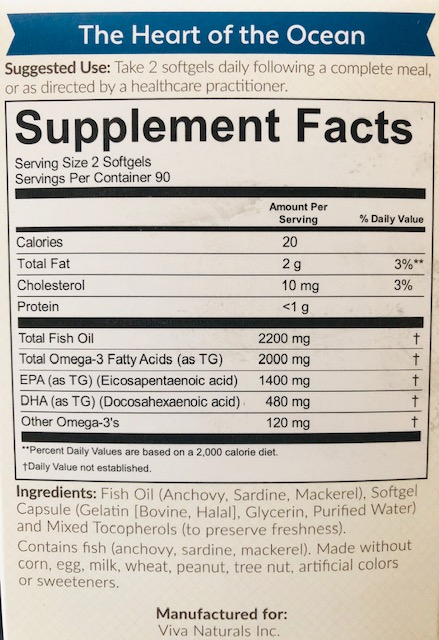
Now, let me clarify with an example of fish oil content labeled in triglyceride (TG) form: In the image, it’s evident that consuming two fish oil capsules at once provides a total of 2000 milligrams of omega-3 (1400 + 480 + 120). 重點來了!!! 魚油上標示的一千毫克(等於一公克)魚油, 不代表我們的確吃進了一公克的EPA & DHA. 我們要看的是: 在這一千毫克魚油內它含有多少的omega 3 . 簡單的說, 如果你的魚油上說明1000mg 的魚油中包含了300mg 的EPA 與200mg 的DHA, 那就代表這1000豪克的魚油裡所含的omega 3 只能算500毫克.
Below, I’ll explain using the labeling of fish oil content in triglyceride (TG) form: In the image, it’s clear that consuming two fish oil capsules at once provides a total of 2000 milligrams of omega-3 (1400 + 480 + 120). 下面我用一款以 三酸甘油脂型式存在(TG form) 魚油含量標示來做說明: 圖裡可以清楚的看到一次吃兩顆魚油膠囊, 可以攝取到omega 3 總值是2000mg (1400 +480+120).
For those following a vegetarian diet, they can obtain omega-3 from sources like flaxseeds and chia seeds. However, this type of omega-3 belongs to the short-chain variety, unlike the long-chain omega-3 found in fish oil. It needs a bodily conversion process to transform into EPA & DHA, but during this conversion, only a small portion might turn into the effective anti-inflammatory EPA & DHA. So, in terms of return on investment, opting for fish oil might be more beneficial if possible. 至於吃素的朋友們, 也是能從flaxseed 跟chia seed 中攝取omega 3. 不過這種omega 3 是屬於中鏈omega 3 , 與魚油中的長鏈omega 3 不同, 它必須透過身體轉化的機制才能轉成EPA & DHA, 但是在轉化過程中最後可能只有少部分能轉化成有效抗炎的EPA & DHA. 所以如果可以, 在投資報酬率上來看, 可能還是以吃魚油比較具有效益了.
I hope this will help to understand simply how many essential fatty acids the current fish oil supplements contain for supplementation. 希望這篇能讓大家簡單的瞭解手邊食用的魚油含有多少我們需要補充的必需脂肪酸. 🙂
Reference 參考資料:
- How to select a good fish oil: 如何選魚油:
https://www.commonhealth.com.tw/article/article.action?nid=61837 - Get to know Omega 3, 6 and 9. 認識omega 3, 6, 9:
https://www.eatbalance.com/news/press/78-omega-3-6-9 - Chinese article- Benefits of consuming fish oil 常吃魚油好處多:
https://www.ttvc.com.tw/omega-3%E6%98%AF%E9%97%9C%E9%8D%B5%E6%AF%8F%E9%80%B1%E5%90%832%E6%AC%A1%E6%B7%B1%E6%B5%B7%E9%AD%9A%E8%A1%80%E7%AE%A1%E4%B8%8D%E7%A1%AC%E5%8C%96-a-204.html - Smart Fat. Steven Masley and Jonny Bowden. 聰明的脂肪.
Here’s my Amazon purchase link for your convenience if you are interested in buying this Viva Naturals fish oil. You may also go to their own website. They usually have a discount once a year mostly around Thanksgiving. 🙂
這裡找Viva Naturals 魚油: https://amzn.to/3No2Tcq . 也可以直接上他們網站購買. 每年的感恩節都會有折扣活動.

